Leaving Money for Your Pet: Navigating the Legal Maze
Discover how to provide for your pet in your will and ensure their care. Learn about trusts, legal requirements, and practical steps.

You’ve probably heard stories of wealthy individuals leaving fortunes to their cats or dogs. It sounds whimsical, but leaving money directly to a pet isn’t possible under UK law. What you can do is set up arrangements to ensure they’re cared for after you’re gone.
The Legal Context of Pets as Beneficiaries
Under the Wills Act 1837, pets are considered personal property rather than beneficiaries who can inherit assets. This means you can’t name your pet as a direct recipient in a will—their inheritance becomes part of the estate’s residue if specified directly.
That said, there are ways around this limitation by using trusts and naming caregivers who understand they’re acting on behalf of your furry friend.
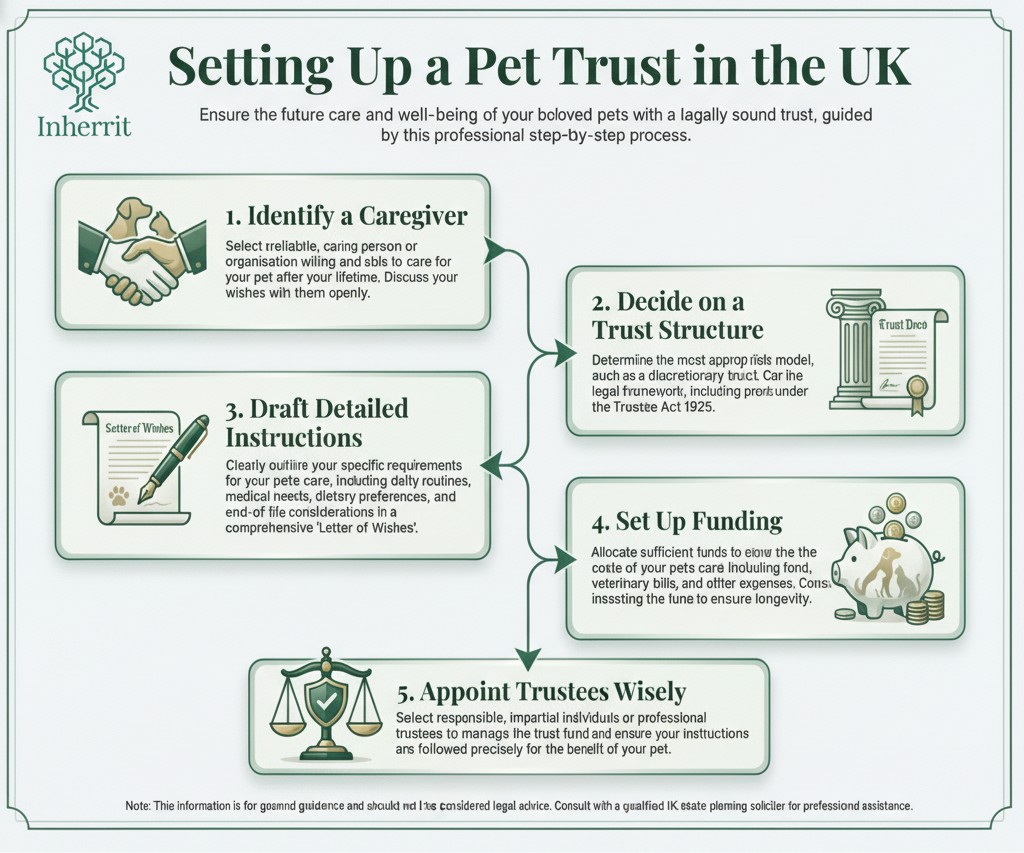
Setting Up a Pet Trust in the UK: A Step-by-Step Guide
- Identify a Caregiver: Choose someone willing to take on responsibility. It’s vital they understand and agree beforehand; springing it posthumously can end badly for everyone involved.
- Decide on a Trust Structure: Typically, you’d establish a trust under the Trustee Act 1925, appointing trustees to manage funds for your pet’s benefit.
- Draft Detailed Instructions: Though not legally binding, drafting a ‘Letter of Wishes’ provides guidance on daily care routines—diet, vet visits, exercise—that maintain continuity in their life.
- Set Up Funding: Estimate costs realistically—food, medical expenses including insurance—so funds aren’t exhausted prematurely or contested as excessive by other heirs.
- Appoint Trustees Wisely: Selecting trustees who manage but don’t necessarily look after the animal helps prevent conflicts of interest—involving professionals like solicitors ensures impartial management for fiducial integrity.
Tax Implications and Benefits of Pet Trusts
Setting aside funds directly impacts Inheritance Tax (IHT) considerations under the Inheritance Tax Act 1984.
- Trusts could affect IHT liability. It’s crucial that potential tax implications are discussed with an experienced solicitor beforehand.
- Distributions within limits: Excessive allocations might seem like tax avoidance or mismanagement when compared against reasonable needs estimates should HMRC become curious—but sensibly done still offers security without undue scrutiny from authorities presiding over probate matters later on (source: gov.uk/probate-property-inheritance).
💡 Pro tip: You’ve read about can you leave money to a pet?. Now take the next step — our app helps you store your will, insurance policies, property deeds, and key contacts in one secure place, ready for when your family needs them.